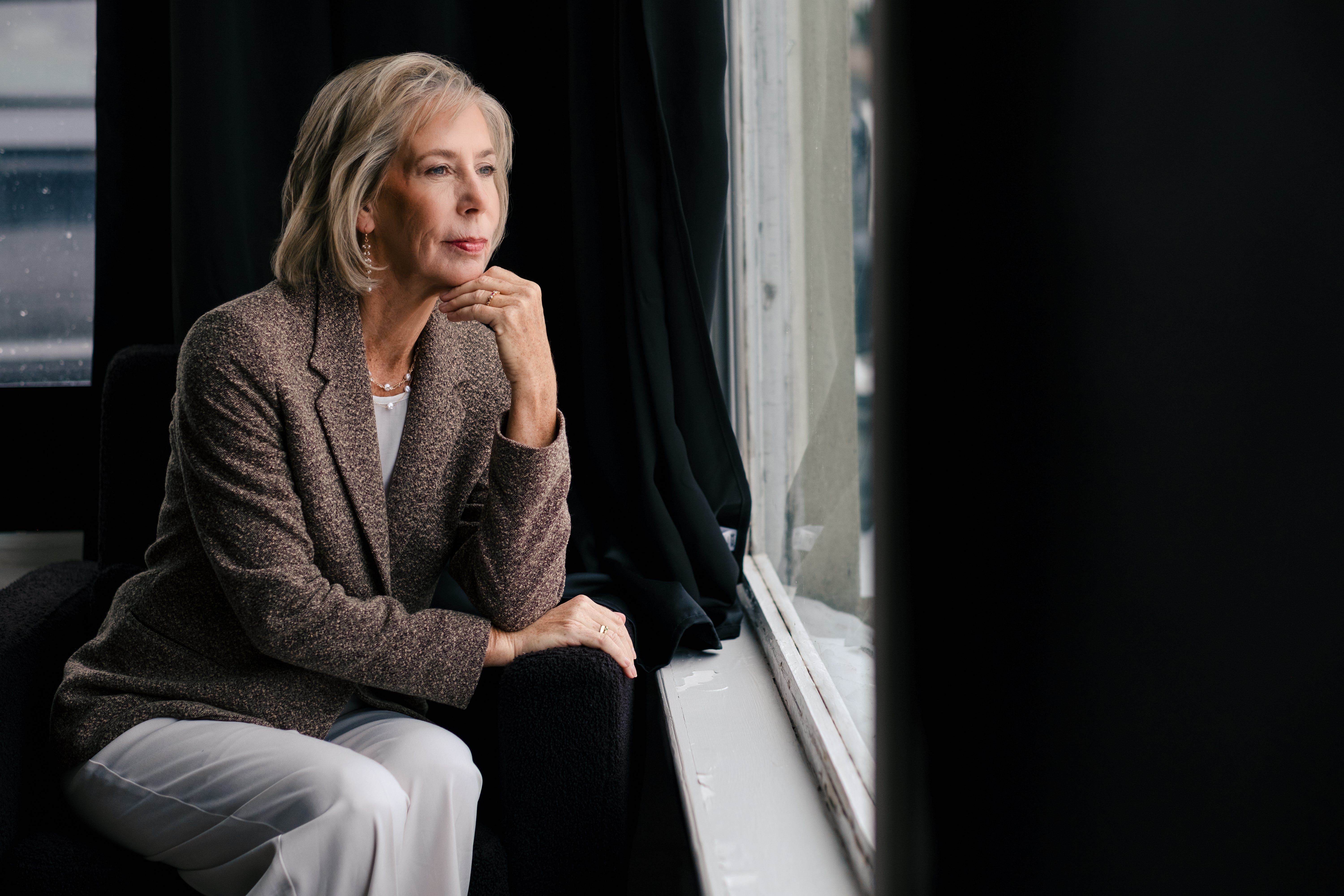
Find Your Voice
3 Lessons
When I had the life I thought would last forever, I wasn’t struggling—because I was home.
I was home in every sense. In our house. With him. In the town and community we lived in. With myself.
It was inevitable I would excel at selling homes as a Realtor—I was in love with every aspect of mine. I understood belonging because I felt it deeply. I belonged.
Until I didn’t.
In 2022, my husband was diagnosed with Alzheimer’s and rapidly declined. I became his caregiver for four years. In the process, I lost my heart, my home, my sense of belonging.
I lost my connection to home. Home was always my safe space, my retreat, my refuge. It contained spaces of joy, creativity, rest, sanctuary. After Alzheimer’s, it became sterile, quiet, functional, manageable. Instead of shielding me from the chaos of the outside world, chaos at times now resided within my home. When the day got crazy, there was nowhere to retreat to anymore.
Four years later, I’m rebuilding. Not the same woman, not the same life. I’m becoming a newer version—developing my own inner universe and belonging to it. Building new community, new interests, new experiences. And creating my own retreat in my home, where I recharge, relax, and express myself.
Here’s what those difficult years taught me about belonging to home:
Lesson 1: Home is not a structure. It’s an internal state.
Back then, I believed home was the house, the marriage, the shared routines.
Despite the diagnosis. Despite the decline. Despite the quiet unraveling.
The only difference between then and now is this: belonging isn’t something you lose when circumstances change. It’s something you return to.
Lesson 2: Your voice can carry you back.
For the first few years, all I had was a blank page and a broken heart.
Since then, I’ve written my way back to myself. Writing connects me to my parents, who were writers. It reminds me I still belong to a lineage, to a story bigger than grief. It gives me permission to access and express what I’ve been holding inside for so long.
All you need is a place to begin. Find your voice, your outlet. Use this new retreat, this new home to create your new self. In addition to the well documented physical benefits, exploring a creative outlet has many benefits:
It’s confidence building: in the context of the spousal caregiver, you make decisions every day and you don’t know whether they are right or not. Developing a talent and practicing it regularly provides a time for you to reflect, access feelings and thoughts and express them with clarity.
It gives you an opportunity to self-express. Creative outlets can give you the chance to work through complex emotions about the caregiver journey with your spouse. You are learning to give care and provide support, but also losing your life’s partner along the way. You are allowed to take time to process all of this and express sadness, anger, confusion.
Your outlet can provide clarity to what you’re experiencing or feeling. Focus deeply on your outlet and see what thoughts come up. You might be surprised, there are some revelations and “aha!” moments there.
Develop empathy. Shirzad Charmin of Positive Intelligence calls empathy a “Sage Power” which helps your brain deal more effectively with life’s challenges. For most of the time, and especially as a caregiver, we live in the “survive region” of the brain - or the fight or flight region - where negative emotions, stress, self-doubt reside and whisper to you. The “thrive region”, conversely, generates positive emotions while handling life’s challenges. These include empathy, compassion, gratitude, curiosity, joy of creativity, and calm, clear-headed laser-focused action. This region is wired for creativity and big-picture awareness of what is important and the best course of action. Activating this region results in release of endorphins that counter the negative impacts of stress-induced cortisol.
Lesson 3: You are allowed to evolve.
When I was caregiving, I was so determined to hold everything together that I neglected the woman quietly disappearing.
Years later, I understand this: grief changes you. Caregiving changes you. Love changes you.
Embracing that change—instead of resisting it—is how you come home again. Find the safe space in your own home.
Change is hard.
It’s unpredictable.
It’s alive.
If you feel that you have been struggling to find your voice, sign up for my newsletter, “The Tender Warrior.”
I was a caregiver of a husband with Alzheimers for 4 years and lost sense of who I was along the way. I write to help others who feel isolated in losing the love of their life to find a sense of belonging after.