Learning to Move Again
From Inertia to Identity, Finding Your Way Back to Yourself
Stuck
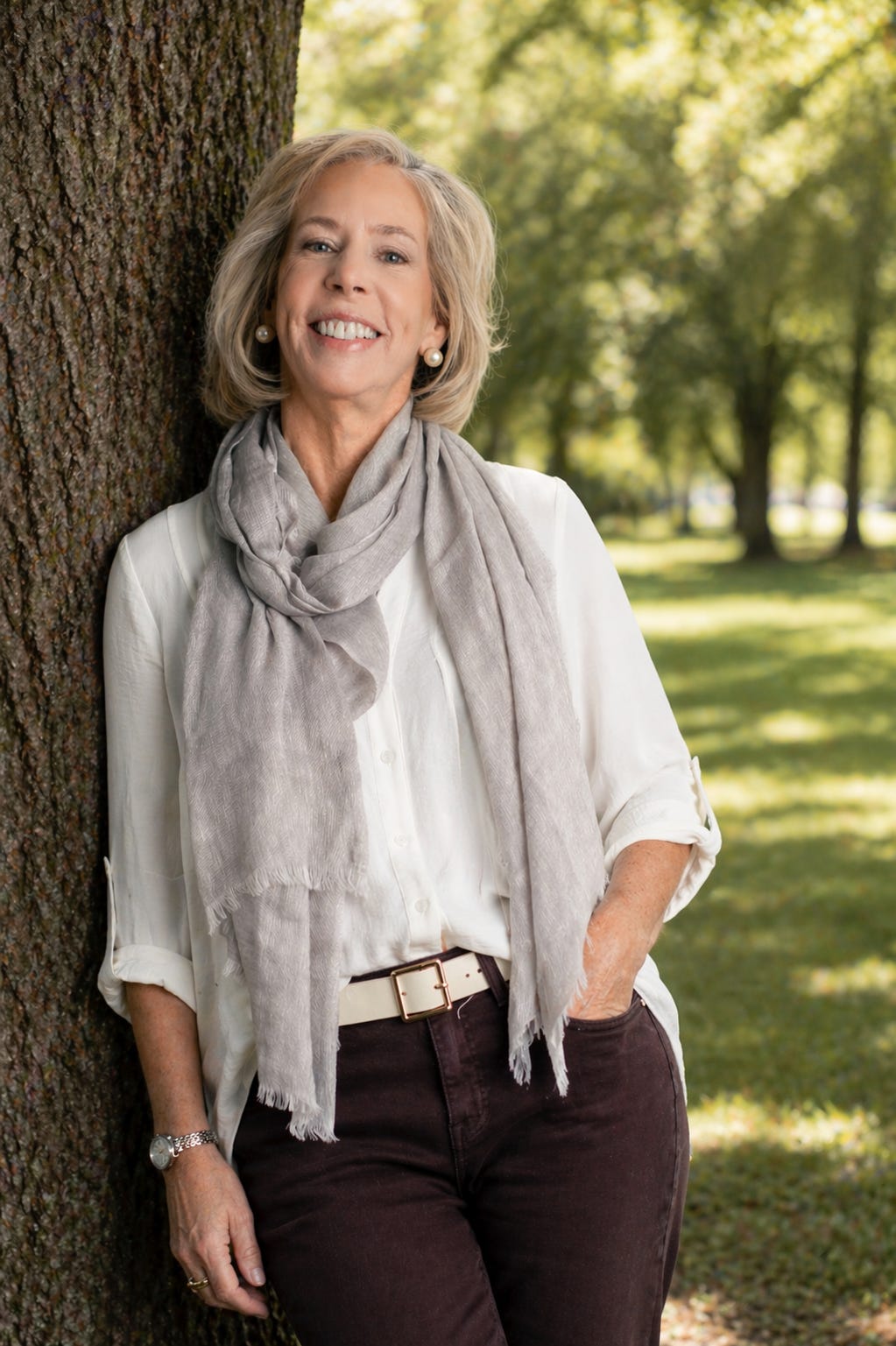
Stuff just keeps piling up. These past few weeks, between Real Estate clients, a long weekend away, and writing - all the small but numerous projects called HOMEOWNERSHIP have piled up. Boxes that need to be unpacked and broken down, paperwork required (the practical matters of my husband’s passing), correspondence, yard work (!) - it was truly a beast I was looking at. I’m stuck!
It feels like it did in 2024, after Lee moved to a Memory Care home. While relieved he was able to receive the kind of 24/7 support he needed, I actually missed being needed. There was an empty space inside.
I had been a wife and partner, then a caregiver for years, and then he moved. And with that departure, my role changed. I was no longer a caregiver.
All at once, I down shifted, from constant demands on time, attention and focus, to…nothing.
It’s a shock to the system, and it’s something that happens on the inside, invisible.
All the care, love, energy and attention I’d directed towards him had nowhere to go.
I tried a few things to fill the void:
I tried to keep our former routines. The news before dinner, our favorite shows, a walk in the late morning. Kind of different when it’s just you.
I filled the day with…anything. Long walks, the gym, golf, lunches…anything to fill the hours. I was spinning my wheels, trying to seem busy and productive.
I ended up becoming (partly through necessity) his part-time caregiver again. That’s a story for another day.
I was stuck in patterns—behaviors, habits, ways of thinking—that were keeping me exactly where I was.
I was stuck. It felt like my body was still in fullspeed caregiver mode, concerned with schedules, routines, medications, rest, ADL’s, and on and on. It took a while for the nervous system to catch up with what was happening on the outside. Like Newton’s 1st Law of Motion, my life had moved to a different place, but I hadn’t!
Research describes Identity Inertia as the psychological resistance to changing one’s self-concept, causing people to stick to old roles, behaviors, and narratives even when they no longer serve them. This resistance creates a “hidden force” that makes evolving into a new identity difficult. We end up fighting against creating a new story for ourselves.
Inertia. Resistance to any change in motion.
I couldn’t move forward, I wouldn’t move backward.
Because we all know, going backward is not a strategy.
But I knew, deep down, that there was something better. I could feel it, I just couldn’t visualize or describe it yet.
Gabrielle Dubois, in her wonderful Substack newsletter Le Secret Club, calls this place The Threshold. Where you imagine a different - better - life, but can’t exactly make it happen.
…where something stops feeling imagined and starts feeling real. Not in a forced or delusional way, but in an almost familiar way.
I will say - this truly happened to me. I don’t know exactly when it hit, but I understood finally that the changes I needed to make were within me, not in my schedule or the shows I watched or the time of day I took a walk.
Within me.
How I saw myself.
How I wanted others to see me.
Who was the person I wanted to be?
Who was I becoming?
💡You don’t have to have lived the caregiver life to experience this foundational shift. Life changes such as loss, career change, divorce, even success, can result in identity shift, on a large or small scale. The point is to recognize it as positive change and embrace it.
**Role Exit Theory** describes 4 stages as you transition out of any deeply rooted role. These stages include doubt, seeking alternatives, the turning point and creating identity. The caregiver transition maps to this framework closely.
Starting with a belief, and moving to a concrete and actionable plan, helped me move forward. Now, with projects and to-do’s lining up:
At home: I cleared the clutter and now focus on completing 1 thing at a time, methodically. I paved the way for progress.
In my work: Focus and attention on customers’ objectives and supporting them through the real estate process.
In my writing: Organizing scattered thoughts (inspirations!) into something meaningful.
In my community: In my community, my efforts to show up—consistently, intentionally.
Because that’s how you move forward. It happens while you’re just living life, in quiet and subtle ways. In the things you notice, what you’re drawn to, conversations you have, the experiences you explore.
And tackling the list of to-do’s.
You begin to feel it.
Movement again.
Out of inertia.
Back into life.
Back into yourself.
I was a caregiver for my husband with Alzheimer’s. I write about Belonging to Self, Community and Home, both during and after caregiving.
If this would be of value to you to hear more about how I restored my sense of community after 4 years of caregiving, Subscribe to Vicki’s Substack, “The Tender Warrior.” As my thank you when you do, you will receive a free download of my checklist, 7 Ways to Find Your Voice Again, a reminder of simple activities to remember yourself as a person outside of your role as “caregiver.”


