Nine Strangers. Seven Days. One Table at a Time.
On how community forms — and how quickly.
I left on a trip last Wednesday. To France. Alone.
To meet a group of women I had never met, for a tour of the gardens of Normandy.
Nine solo travelers — from different states, different backgrounds, different backstories — joined by a single shared desire: adventure, discovery, and the particular kind of company that forms when women who travel alone choose, for seven days, to travel together.
Nine travelers. Nine lives.
The engineer. The food scientist. The CPA. The advertising and fashion industry insider.. The Realtor — and writer, though no one knows that yet. The one who tried on several hats before becoming a voice coach, helping students find their voices literally, through song. The clinician who found her calling working on vaccine trials during COVID. The flight attendant. The special education teacher.
We had never met. We had only a shared itinerary and, a few days before departure, each other’s contact information.
Immediately, dinners were planned. We all wanted to meet and start the introductions. To start the adventure, going to a new place with new people.
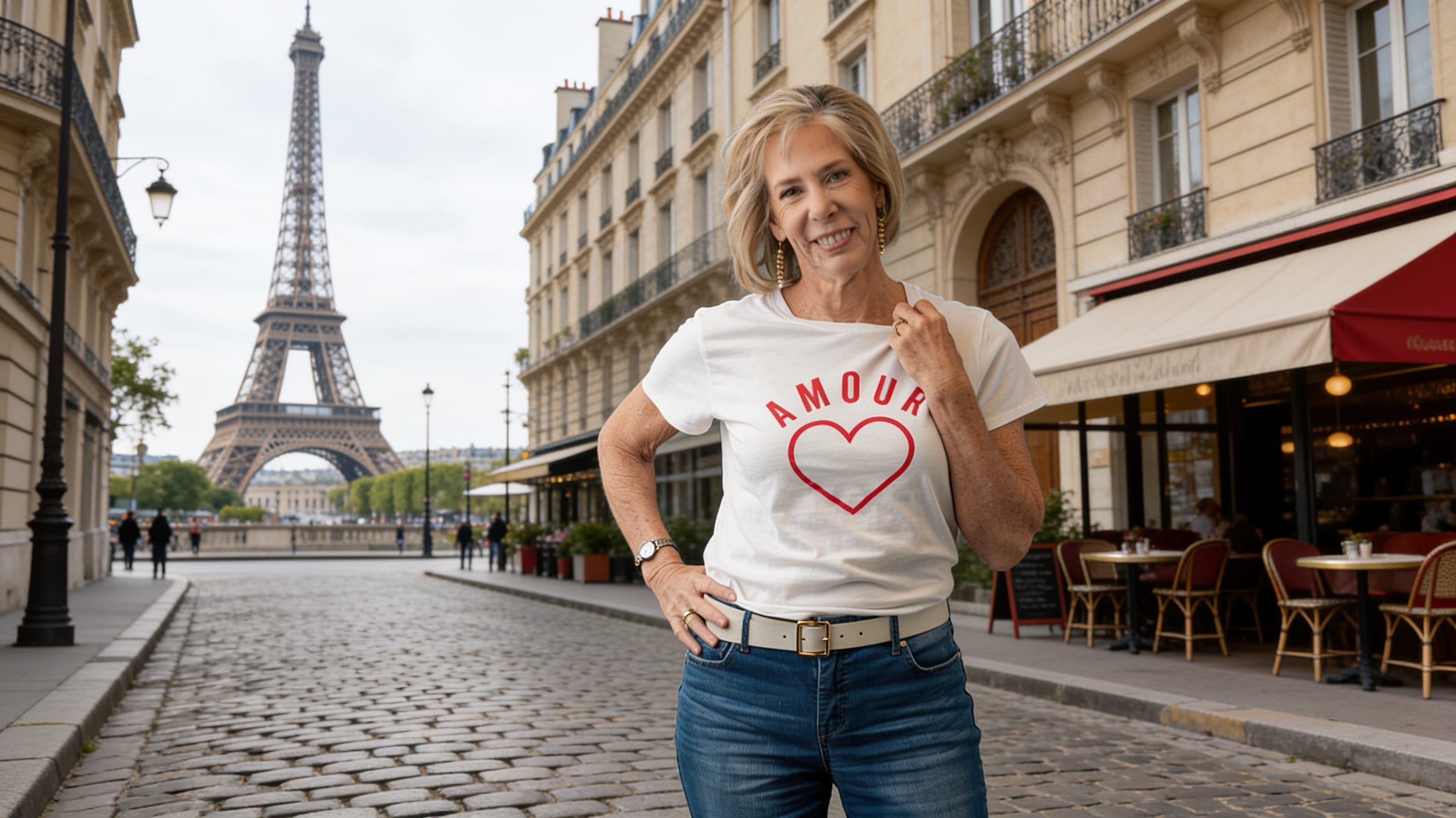
In Paris — because of course we all arrived early to soak in the city of light, even at 105 degrees — we began the work of becoming. We shared a few courses, some wine, a great deal of people watching, and so began the careful, curious exchange of first impressions. Where we’ve lived. What we’ve done. Where we’ve traveled and with whom and what went gloriously, absurdly wrong along the way — and ended with a chuckle because we are lucky enough to be doing this, so what does any of it really matter?
Research on social bonding tells us something about forming bonds in a group: shared experiences deepen human connection through neurochemical processes as much as emotional ones. When people participate in activities together, the brain releases oxytocin — the bonding hormone — which promotes trust and attachment. Dopamine follows, linking the shared activity with pleasure and reinforcing the connection. Common experiences create shared memories that transform you and me into we.
What the research also tells us is that this process doesn’t require years. It requires presence. It requires a real experience, shared in real time, with genuine attention paid to the people beside you. When everyone shows up, and communicates, appreciates and learns about each other, we become community.
By the second day in Paris, we were texting each other.
Where are you? What are you doing?
I found a wonderful vintage boutique — come meet me.
Walking into the hotel lobby one afternoon, I ran into one of us. We decided to have lunch. As we walked, we ran into another. She joined us. Then another. And suddenly we had a party for lunch — born of nothing more than proximity, openness, and the knowledge that for the next seven days, these women would be our people.
There is also something that happens when community forms among strangers rather than among people who already know each other.
Research finds something counterintuitive: new friendships formed within a shared experience matter more to a sense of belonging than existing ones brought into it. In studies of community participation, people who formed new friendships through a shared group showed significantly greater connection and engagement than those who arrived already knowing members. Existing friendships, it turns out, can actually close a group inward. New ones open it.
This is what I am watching happen in real time. None of us arrived knowing each other. None of us had history to fall back on, or old dynamics to navigate, or roles already assigned. We arrived as pure possibility — nine women with nine stories, none of them yet written together.
That openness is the thing. It is what makes a group of strangers, under the right conditions, capable of becoming something real so quickly.
Sitting at these Parisian café tables, I have been thinking about a different kind of community — the one I built during the caregiving years.
That community was formed by necessity, not by choice. The medical professionals, the care team, the friends who knew Lee before the disease and stayed anyway, the handful of people I allowed close enough to see what was actually happening inside our walls. I didn’t choose those people the way I chose this trip. That community was built from shared weight, shared worry, shared love for one person who was slowly disappearing. It was real and it was sustaining and I could not have survived those years without it.
This is different.
This community is being built from shared joy. Shared curiosity. Shared willingness to show up and try. Nobody here needs anything from anyone else in the way that caregiving demands. We are not holding each other up. We are walking alongside each other, which is a different thing entirely — it’s lighter, and it just feels freeing to simply be Vicki. Not a caregiver, not a primary contact for legal and medical documents, but simply Vicki, who has been through the fire and is on the other side.
Both kinds of community are real and matter tremendously. But there is something particular about choosing your people — about building belonging not from what you need to survive, but from who you want to become.
That is what this trip feels like.
We will begin to see who leads conversations and who sits quietly to the side — and is it because they don’t care, or because they are simply doing their own kind of observing? We’ll see who turns every exchange back toward themselves, and who leans in to hear more of yours. We’ll learn who is genuinely curious about other people’s stories, and open about their own.
And who likes dessert.
Today is day four together, and we are no longer a group of strangers. I can see each of them now as individuals — their particular quirks and preferences and ways of moving through the world. Who doesn’t like mushrooms. How each takes her café. Who has a high sun tolerance and who does not. Who steps quietly out of a group tour to stand longer in front of something that moved her — a bloom, a view, a particular quality of afternoon light. Who is more contemplative.
We are easily breaking off in pairs or threes now — sitting at a café over a coffee or a glass of wine, talking until dinner. Already sharing books and hobbies. Already talking about some of our fears.
These are the textures of a community forming in real time. Not a community of shared history — we have almost none. But a community of shared experience, shared willingness, shared presence.
For seven days, we are each other’s people. And what I am watching, in real time, is the science of belonging in action. How quickly it forms, when the conditions are right. How little time it actually takes, when people show up willing to be known.
I’m Vicki.
Have you ever formed an unexpected community with strangers — on a trip, in a waiting room, in a support group, on a walk? What made it happen? I’d love to hear in the comments.


You are giving me a glimpse of a possible future. And it is good. Thank you.
Ps are these photos Vio’s handiwork?