One of the things I learned as a caregiver for my husband with Alzheimer’s:
I can’t control the external circumstances of life. But I can control how I interpret and react to them.
One of the things I learned as a caregiver for my husband with Alzheimer’s:
I can’t control the external circumstances of life. But I can control how I interpret and react to them.
It starts with getting dressed.
After Lee’s diagnosis, we both felt powerless, like pawns in some grotesque game being played out in the universe. I’m sure people diagnosed with cancer or another terminal disease (ALS, Parkinsons, Hodgkins…) feel something similar.
Nothing in life had prepared either of us for the journey ahead. And Lee, facing the imminent loss of memories and the eventual near-total cognitive loss, was in denial at first. I think the depth of what he felt about the diagnosis was hard for him to access and articulate, so he held on to me for as long as he could.
In a moment of clarity, he told me he understood this wasn’t the life I signed up for, and he hoped I would do all the things I wanted after he was gone.
But that wasn’t how I played this out:
I immediately made plans to travel (while Lee could still enjoy it). Alaska, Canada, The Ocean Course at Kiawah, trips back to his home town for visits with family. Mt. Rushmore. Looking back, those trips helped us maintain some normalcy and kept the wolf at the door.
We faced the world. Lee always paid attention to his appearance. Not a trend setter, but clean and put together, telling the world, “This is how I want to be seen.” For as long as it was possible, he carefully chose his outfits for the day and presented himself to the world. We both did. It was one small thing we could control. For a moment, we found strength amid circumstances we couldn’t control.
To me, Lee’s attention to how he looked sent a message: “I show up.” And that’s the thing—in business, with our family and friends, and in our daily activities, the act of showing up is a pillar of commitment and respect. We start with our outward appearance.
Alyona Synenko of the New York Times writes about the toll the Russia/Ukraine war is taking on Ukraine’s population: “We dress to show not only who we are but also who we want to be. We dress to impress and to attract the attention of other people and show off. But we also dress out of defiance; to look fabulous is to deny the power of any dreariness around us. We dress for a better world. Maybe that can conjure it into being or just manifest a smile out of the others around us.”
Ms. Synenko goes on to describe women in refugee aid camps around the world, facing food and water shortages, making themselves elaborate dresses. “It was a way for them to be part of their community and to reinforce a sense of self beyond the immediate circumstances they could not control.”
Now I pay close attention to my wardrobe and what it says about me. I’ve organized it so I don’t experience “decision fatigue” every day. My choices have a singular purpose: What message does it convey? Does it say, “I show up”?
Sometimes we don’t wait to feel ready. We start by walking the walk.
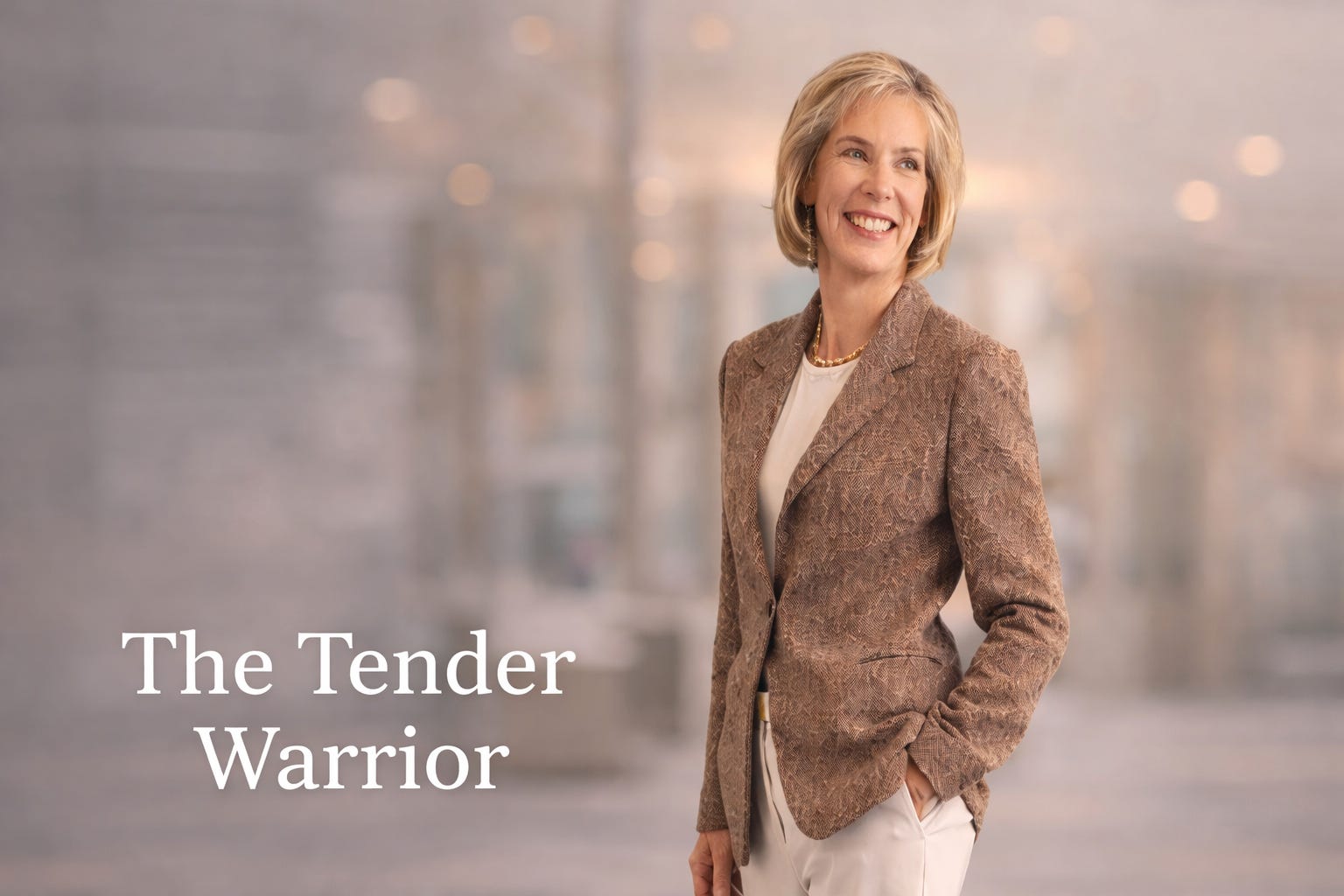
Finding your way as a caregiver can feel like an isolating journey, but it doesn’t have to. Subscribe to my newsletter, The Tender Warrior, to learn how simple steps can help you hang onto a sense of the normal.
I was a caregiver of a husband with Alzheimers for 4 years and lost sense of who I was along the way. I write to help others who feel isolated in losing the love of their life to find a sense of belonging after.


